By Joseph Maliakan
Education according to the Indian Constitution, is in the concurrent list and both the State governments and and the union government are entitled to legislate on the subject. However, successive Union governments have so far left it to the states to legislate on education, especially school education.
The NDA government has been since 2014 constantly encroaching on the rights of the states, especially in the fields of education and agriculture, both of which should have been best left to the states considering the huge diversities in the country. Our diversities are many , language, culture, religion , climate, geography, and caste among other things.
School education is largely under the control of the union government through various institutions like the Central Board of Secondary Education (CBSE), the National Council of Educational Research and Training (NCERT), and the Kendriya Vidyalaya Sangathan (KVS). Admission to various professional colleges and universities are controlled through NEET, CUET, IITJEE, and similar examinations, which adversely affect the prospects of the rural poor, especially those belonging to the Scheduled Caste and Other Backward classes, because they do not have the money for coaching. These centralized entrance tests have not promoted merit; they have only helped the growth of the uneducational coaching industry.
The Indian Constitution guarantees education through Fundamental Rights, Directive Principles, and Fundamental Duties, mandating free and compulsory education for children aged 6 to 14 under Article 21A. This article was inserted by the 86th Amendment Act. 2002 makes free and compulsory education a fundamental right for children aged 6 to 14.
Article 29 protects the interests of minorities by ensuring any section with a distinct language, script, or culture has the right to conserve it. Article 30 grants all minorities based on religion or language the right to establish and administer educational institutions of their choice. Clause 2 of the article adds that the state shall not grant aid to educational institutions on the ground that they are under the management of a minority, whether based on religion or language.
Articles 15 and 16 prohibit discrimination in educational institutions and guarantee equality of opportunity in educational access. Article 45 mandates that the state endeavor to provide early childhood care and education for all children until they complete the age of six years.
Article 350 A directs states to provide facilities for instruction in the mother tongue at the primary stage.
Nowhere in the Constitution is there any provision for setting up school management committees. In India there are two kinds of schools: government and private schools . Most government schools are administered by state education departments. The union government does not administer schools . However, the central Board of Secondary Education gives recognition to schools that follow its syllabus. They are mostly private schools administered by a variety of organizations and individuals. There are schools administered by trusts, societies, corporations, churches, and religious congregations of Hindus, Muslims, Christians, Sikhs, and others.
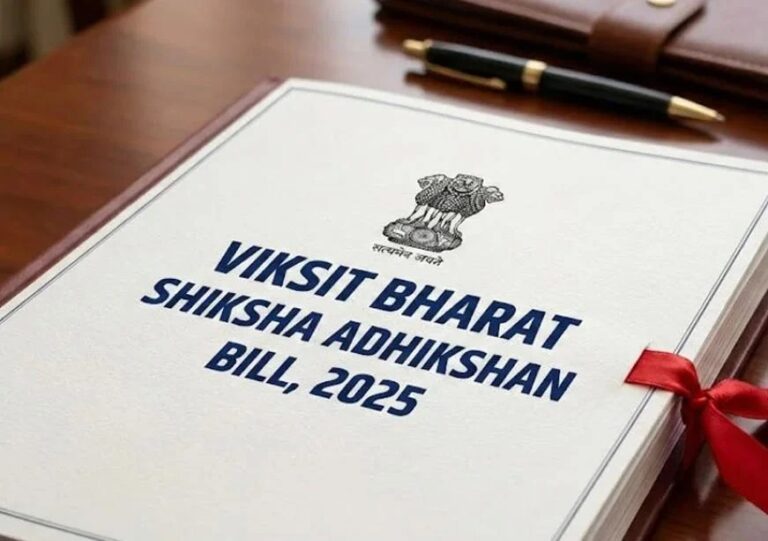
The guidelines issued by the Department of School Education and Literacy under the Ministry of Education seek to “strengthen community participation and decentralized school governance.” Now one wonders under what law the Ministry of Education, the union government, derives its power to replace present school managements by school management committees.
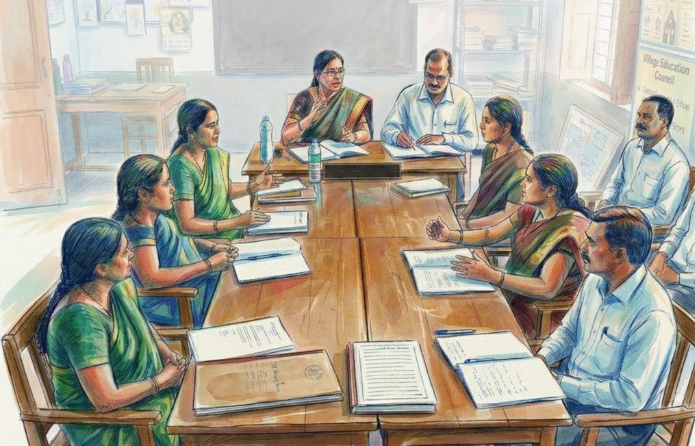
Under the guidelines every chool must constitute an SMC within one month of the academic session , replacing the existing School Management and Development committees The size of these committees will vary depending on student strength, consisting of 12 to 25 members. Seventy-five percent of the members of the SMC must be parents or guardians of students and the remaining 25 percent will be drawn from local authorities , teachers, educationists, alumni, and frontline health workers such as ASHA and Anganwadi workers.
There is no clarity as to who will enforce the guidelines and under what law. No private school management in the country whether majority or minority will willingly surrender their right to manage the institutions they have established
It will only lead to the school management approaching courts to enforce their right to administer the institutions they have established .The guidelines mandate that the Chairperson and the Vice Chairperson must be elected from among the parent or guardian members , while the principal of the school serves only as a member secretary. Monthly meetings are compulsory with strict quorum requirements and public disclosure of minutes.
The guidelines have provisions for subcommittees, including a School Building Committee , tasked with overseeing infrastructure , safety , learning outcomes , attendance and counseling. The SMCs are entrusted with wide ranging responsibilities , from ensuring enrollment, monitoring mid day meal programme, promoting hygiene, digital learning, tracking dropouts, and building sports infrastructure.
Further, 50 percent of the members must be women, and representation for SC, ST , OBC communities should also be made. While in principle the new guidelines looks very attractive on paper, these will not be enforceable on the ground. At best these guidelines can be described as UTOPIAN!