By Joseph Maliakan
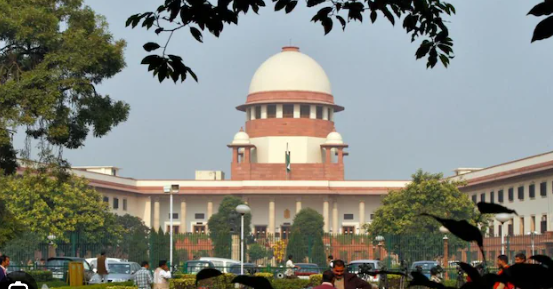
In a judgment that will have far-reaching consequences for the protection of human rights under Article 21 of the Indian Constitution, the Supreme Court on Monday, 18 May 2026, while granting bail to Sayed Ifthikar Andrabi of Jammu and Kashmir, arrested in 2020 under the draconian Unlawful Activities Prevention Act (UAPA), said that the rigors of Section 43(D)(5) of the UAPA—which restricts the grant of bail—will ‘melt down’ where prolonged incarceration and delayed trial lead to violation of Article 21 of the Constitution.
Article 21 states, “Protection of life and personal liberty: No person shall be deprived of his life or personal liberty except according to procedure established by law.”
The Supreme Court bench comprising Justices B. V. Nagarathna and Ujal Bhuyan, in their order, said that in K.A. Naajeeb vs. Union of India (2021), a three-judge bench of the Supreme Court had held the fundamental right to a speedy trial could be a ground for grant of bail even under UAPA. The bench had then upheld the bail granted to Najeeb, arrested and jailed from April 2015. Najeeb was an accused in the chopping off of the hand of a Malayalam professor of Keralam.
Justice Bhuyan, writing for the bench, said, “Therefore, the caution of Najeeb is that continued incarceration cannot go on unabated by a mere discharge by the State of the primary facie standards under Section 43-D (5) of the UAPA… The constitutional inquiry in Najeeb therefore operated independently of, and not withstanding, the statutory embargo of Section 43-D (5) in the realm of constitutional principles.
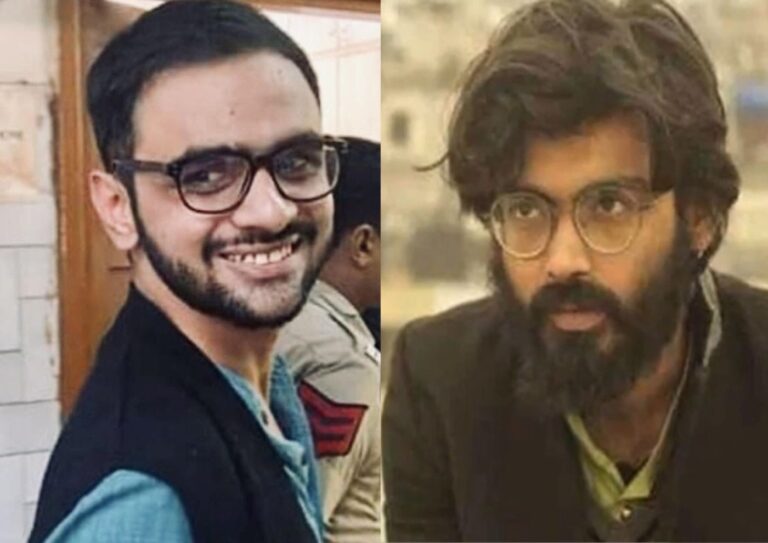
However, in two subsequent judgments, two separate benches of the Supreme Court took a very divergent view from the clear, distinctive trajectory it had earlier followed. In the Gulfisha Fatima vs. State case, an SC bench of Justices Aravind Kumar and N.V. Anjaria on 5 January 2026 granted bail to five accused in the Delhi riots conspiracy case but denied relief to Khalid and Imam, saying they stood on a “higher footing in the hierarchy of participation.” The court had unjustly observed that prolonged incarceration cannot be an “absolute entitlement” to seek bail in terror cases.
On Monday Justice Bhuyan, in his order, said, “We have serious reservations on various aspects of the judgment in the Gulfisha Fatima case, including foreclosing the right of the two appellants to seek bail for a period of one year.
“The judgment in the Gulfisha Fatima case would have us believe that Najeeb is only a narrow and exceptional departure from Section 43-D (5) justified in extreme factual situations. It is this hollowing out of the import of the observations in the Najeeb case that we are concerned with,” the SC order emphasized.
In the case of Gurwinder Singh, the UAPA accused, the Supreme Court bench rejecting bail had held that relief could be denied if accusations appear to be prima facie true.
In this context, the SC Bench on Monday said, “We make it clear that K.A. Najeeb is the binding law and entitled to the protection of stare decisis.” It cannot be diluted, circumvented, or disregarded by the trial court, the high courts, or EVEN BY BENCHES OF LOWER STRENGTH OF THIS COURT.”
The theory of ‘stare decisis’ (to stand by things decided) mandates courts to follow historical or established precedents when making rulings on similar cases. It ensures predictability, stability, and fairness in the legal system, though higher courts can overturn past rulings in exceptional circumstances.
“A judgment rendered by a bench of lesser strength is bound by the law declared by the bench of greater strength. Judicial discipline mandates that such a binding precedent must either be followed or, in case of doubt, be referred to a larger bench. A smaller bench cannot dilute, circumvent, or disregard the ratio of a larger bench,” the order pointed out.
In the case of Andrabi, the court directed that he be released on bail, subject to conditions the NIA court may deem fit. Andrabi, who was arrested by the NIA in 2020, was earlier denied bail by the NIA court and also the Jammu and Kashmir High Court. He was accused of having links with Pakistan-based handlers of the Lashkar-e-Taiba and Hizbul Mujahideen and involvement in a cross-border narcotics smuggling racket to fund terrorist activities in India. Though the chargesheet was filed in his case on 5 December 2020, the trial was moving very slowly, and over 350 prosecution witnesses are to be examined!
Citing statistics on the low conviction rate in the UAPA cases, the SC judgment said, “It is evident that the countrywide percentage of conviction under the UAPA for 2019-23 hovers between 2 percent and 6 percent. In other words, there is a 94 to 98 percent possibility of acquittal in such cases. When it comes to the Union Territory of Jammu and Kashmir, the percentage of conviction is abysmal, to say the least. For the aforesaid period the annual rate of conviction is always less than 1 percent. It means that at the end of the trial there is a 99 percent possibility of acquittal in such cases.”
“With these kinds of statistics staring us in the face, the question is, should we continue the detention of the appellant or defer the consideration to a later stage, simply because the charges are serious?” the judges wondered.
Now what awaits Umar Khalid and Sharjeel Imam, who have been arrested in the 2020 Delhi riots case and have been incarcerated in Tihar jail since then? Though the SC in the Gulfisha Fatima case foreclosed their right to seek bail for a year, citing the latest judgment of the SC, they could immediately apply for bail, according to Ashok Panda, senior advocate.